
The Drop-Shoulder Silhouette: A Streetwear Manufacturing Guide
In the rapidly evolving landscape of fashion, silhouettes dictate the era. Over the last decade, the industry has experienced a massive shift away from slim, tailored fits toward relaxed, oversized proportions. At the center of this movement is the drop-shoulder silhouette.
For streetwear brands and luxury lifestyle labels, mastering this specific cut is no longer optional—it is a baseline requirement. However, manufacturing the perfect oversized garment requires strict technical execution. This guide breaks down the anatomy of the drop-shoulder, fabric requirements, and how to successfully scale your next collection.
What Exactly is a Drop-Shoulder Garment?
To understand the drop-shoulder, you must first look at traditional garment construction. In a standard set-in sleeve, the seam that connects the sleeve to the main body of the shirt rests exactly on the acromion bone (the natural point of the human shoulder).
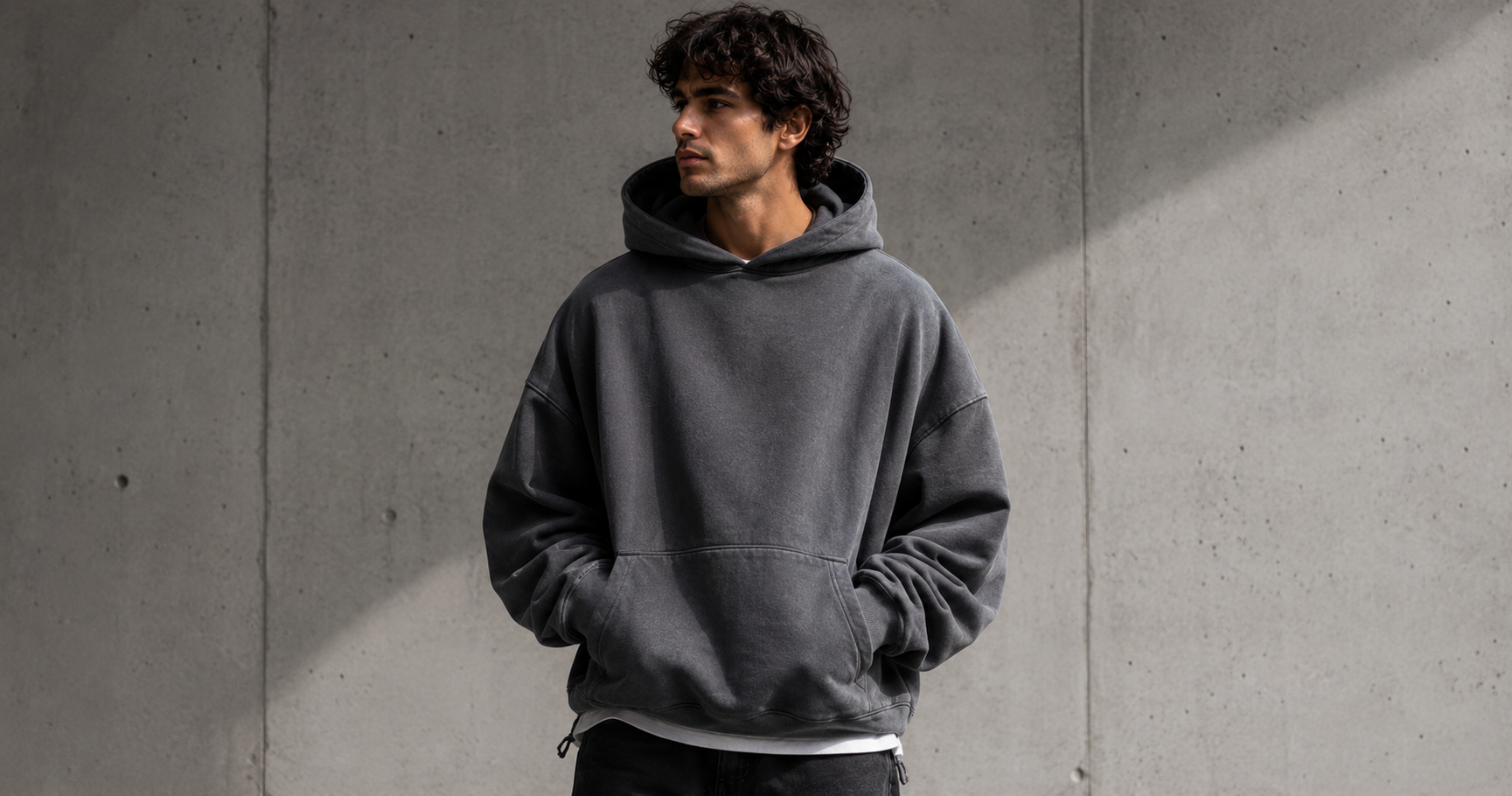
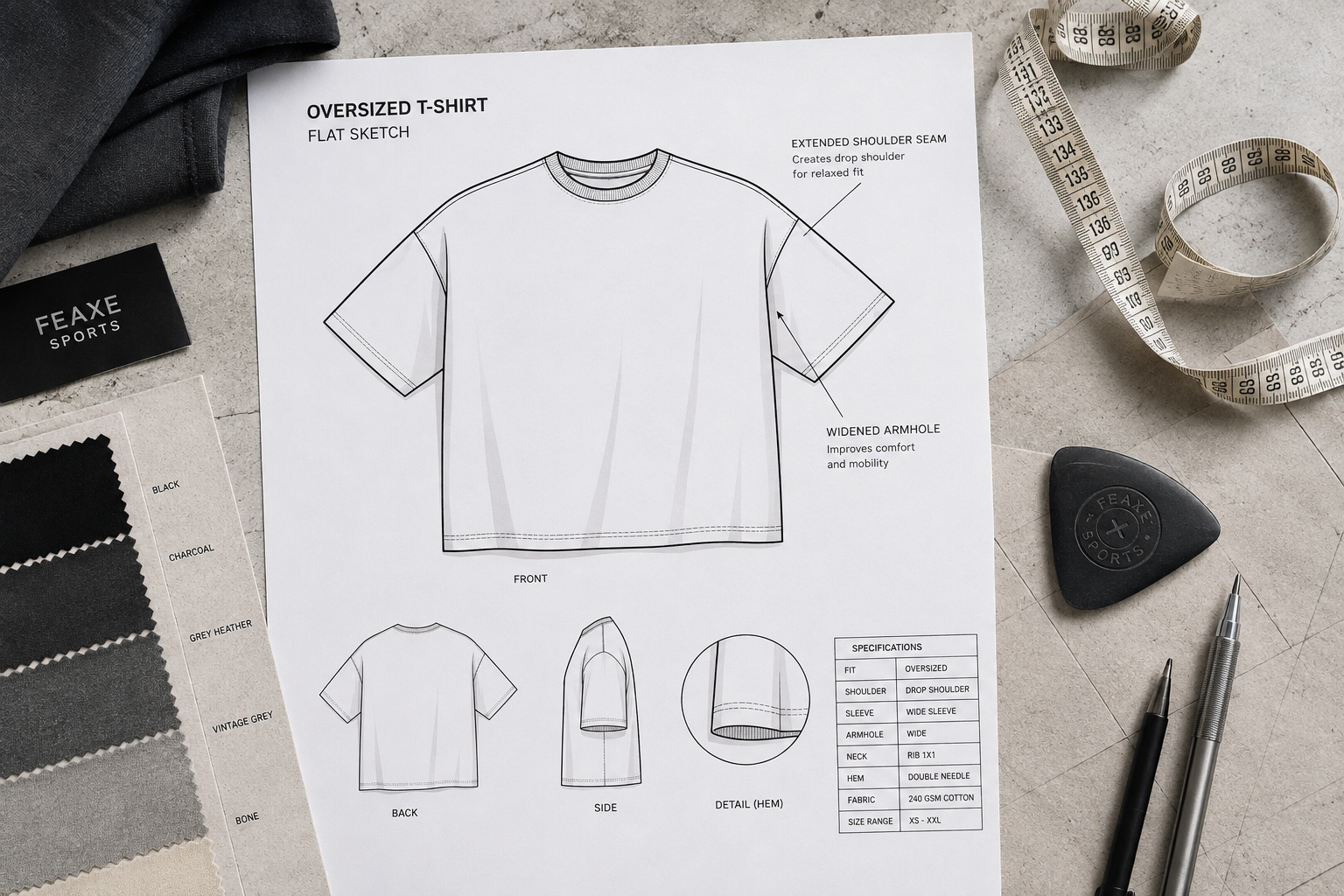
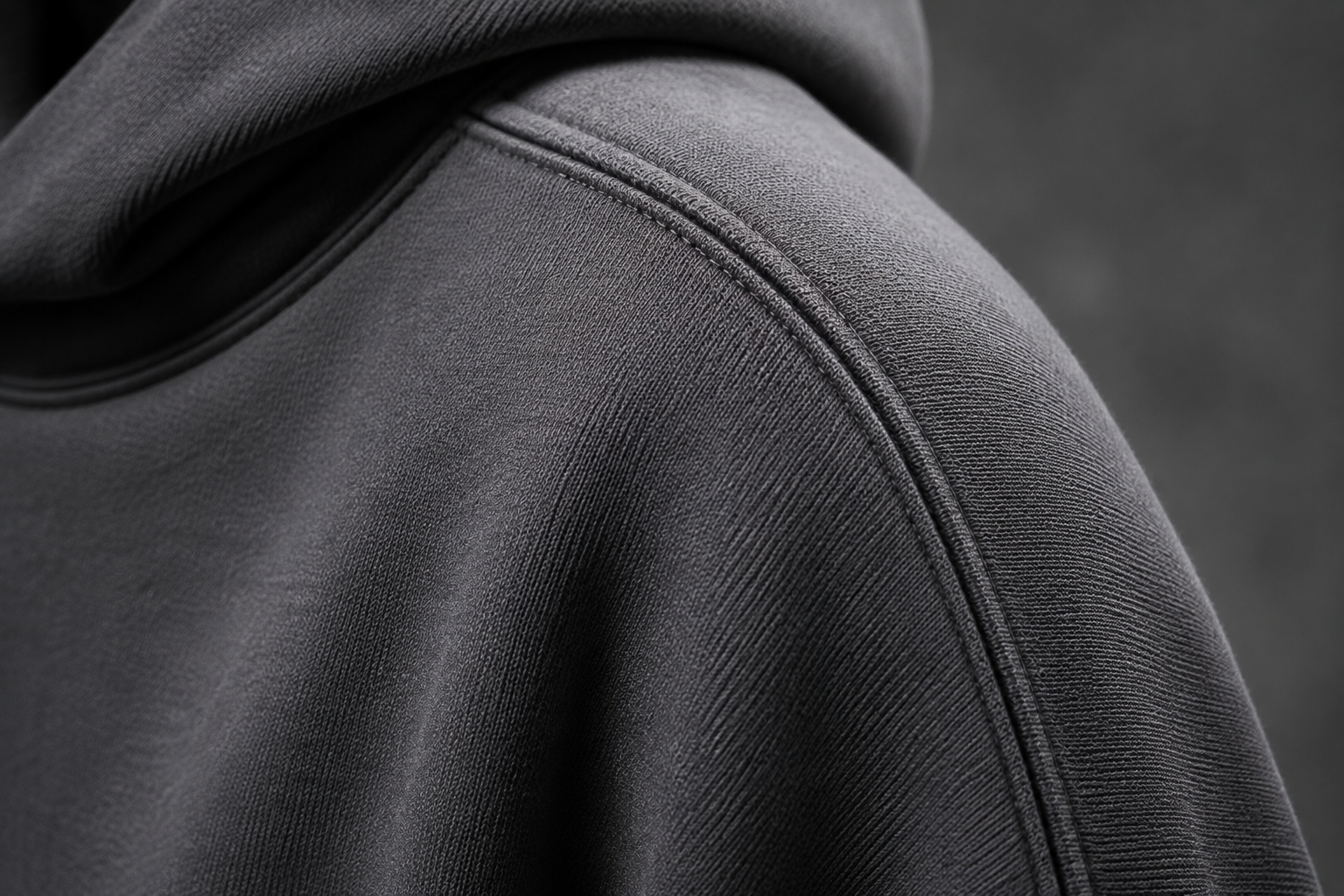
In a drop-shoulder design, the shoulder panel is intentionally extended horizontally. This pushes the connecting seam past the natural shoulder line, causing it to “drop” and rest lower down on the upper bicep. This structural adjustment creates a wider chest, a larger armhole, and the iconic “boxy” drape that defines modern streetwear.
Why the Oversized Fit Dominates Modern Fashion
The rise of the oversized aesthetic is driven by a combination of comfort and high-fashion influence. Luxury fashion houses adopted the loose, draping aesthetics of 1990s skate culture, elevating it with premium textiles. The drop-shoulder provides several commercial advantages for brand owners:
- Universal Appeal: The relaxed fit flatters a much wider variety of body types compared to restrictive, slim-fit garments.
- Gender-Neutral Design: Boxy, oversized hoodies and t-shirts are easily marketed as unisex, streamlining your inventory and broadening your target demographic.
- Increased Decoration Space: A wider chest panel provides a massive, uninterrupted canvas for Direct-to-Film (DTF) graphics and oversized bulk screen printing.
Fabric Selection: The Secret to the Perfect Drape
You cannot create a luxury drop-shoulder garment using cheap, lightweight fabric. If you attempt to manufacture an oversized hoodie using a flimsy 250 GSM fleece, the garment will look sloppy, cling to the body, and lose its shape immediately.
The secret to the perfect streetwear silhouette is structural rigidity. The fabric must be heavy enough to support its own weight and hold a structured, boxy shape away from the torso. When sourcing materials for an oversized collection, we highly recommend utilising heavyweight cotton ranging from 400 GSM to 500 GSM.
How to Specify a Drop-Shoulder in Your Tech Pack
Communicating this design to a manufacturing facility requires precise mathematical grading. When building your apparel tech pack, you must clearly define three critical measurements:
- Across Shoulder Measurement: This number must be significantly wider than a standard fit to ensure the seam falls correctly on the bicep.
- Armhole Depth (Straight): A dropped shoulder requires a deepened armhole to prevent the fabric from bunching tightly under the armpit.
- Chest Width: To maintain a boxy look, the chest width should generally run straight down to the hem without tapering at the waist.
At Feaxe Sports, our pattern engineers specialize in bespoke OEM streetwear silhouettes. Whether you are launching a heavyweight winter hoodie or an oversized pump-cover gym tee, you can test your exact drop-shoulder dimensions with our low-risk 50-piece minimum order quantity.
Streetwear Manufacturing FAQs
Q: Will an oversized fit complicate my sizing chart?
A: It requires careful communication. We recommend providing a custom sizing chart on your website that explicitly states the item features an “oversized, boxy fit,” advising customers to order their true size for the intended baggy look, or size down for a more standard fit.
Q: Does a drop-shoulder use more fabric, and will it cost more?
A: Yes, oversized garments require a higher fabric yield (more raw textile per unit) and utilize heavier GSM materials. This slightly increases the manufacturing cost per unit compared to a standard slim-fit t-shirt, but allows you to command a significantly higher retail price.
Q: Can I use flatlock stitching on a drop-shoulder hoodie?
A: We typically recommend traditional overlock stitching for heavyweight streetwear. Flatlock stitching is generally reserved for tight-fitting activewear and can be difficult to execute cleanly on heavy 450+ GSM fleece.