
Best Fabric for Performance Sportswear: A Complete Sourcing Guide
When engineering high-performance athletic apparel, design aesthetics are only half the equation. The physical functionality of a garment relies heavily on textile choice. Choosing the wrong material can result in heavy sweat retention, skin chafing, transparent leggings, or garments that lose their shape after a single workout.
For apparel brand owners and sourcing managers, understanding performance textiles is essential. This guide breaks down the top fabrics used in custom athletic manufacturing and helps you select the perfect textile for your next activewear collection.
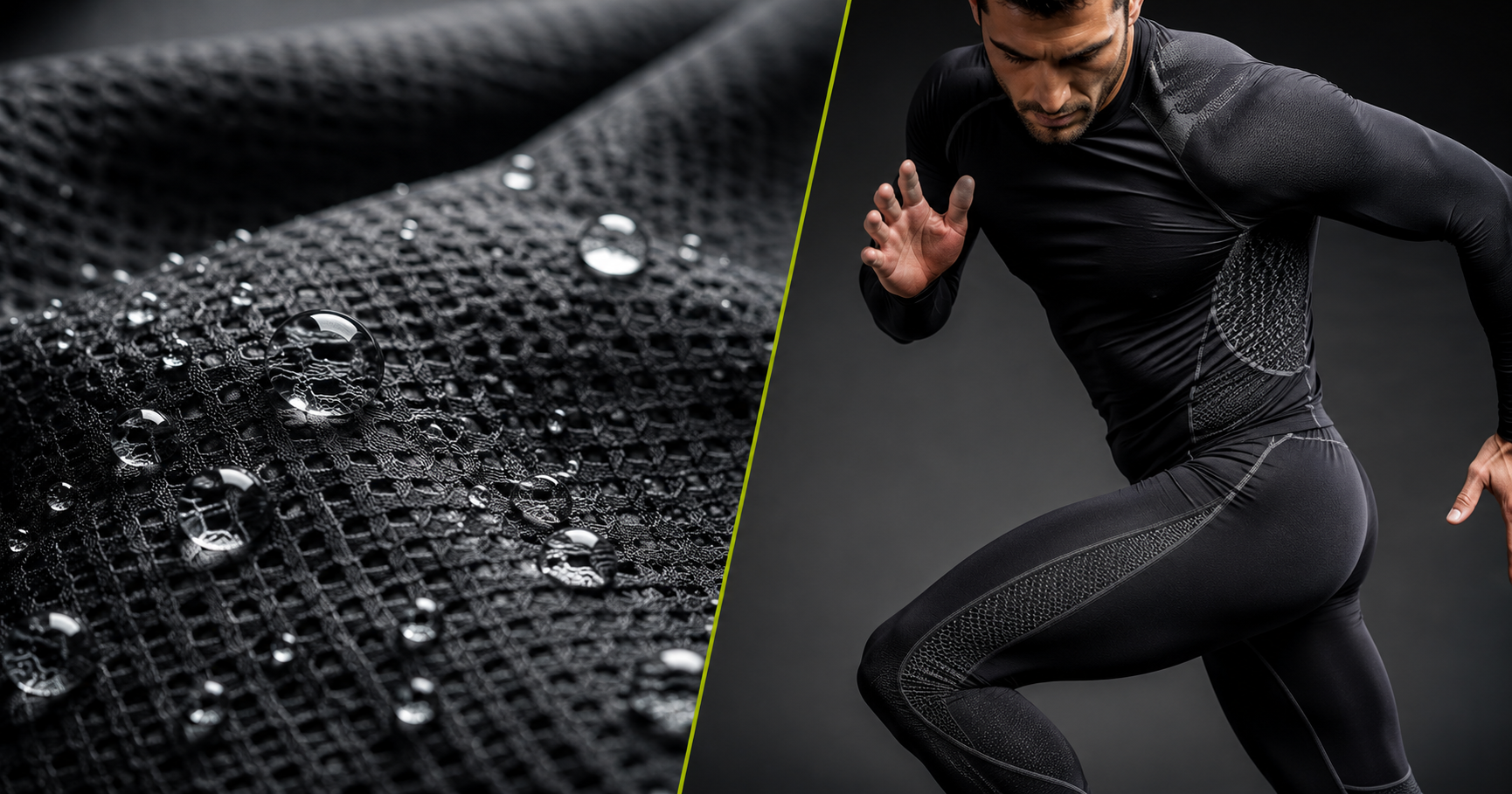
Why Fabric Selection Matters in Sportswear Manufacturing
Unlike lifestyle fashion or streetwear, activewear must perform under extreme physical stress. Athletic textiles are engineered to solve specific physical challenges:
- Moisture Management: Pulling sweat away from the athlete’s skin to the outer surface of the fabric for rapid evaporation.
- 4-Way Stretch: Allowing the garment to expand horizontally and vertically during movement without restricting mobility.
- Durability and Recovery: Withstanding high tension, repeated wash cycles, and abrasive friction without sagging or pilling.
At Feaxe Sports, every raw textile roll undergoes strict testing for weight, colorfastness, and elasticity during our pre-production garment quality control process before entering the cutting room floor.
Top 4 Performance Fabrics for Custom Sportswear
1. Polyester: The Undisputed King of Athletic Apparel
Polyester is the primary workhorse of the sportswear industry. It is a synthetic polymer fabric that is lightweight, durable, and naturally hydrophobic (meaning it repels water rather than absorbing it).
- Best Used For: Running shirts, gym tees, football kits, and lightweight jackets.
- Key Advantage: It absorbs less than 1% of its weight in water and provides the ideal base canvas for vibrant, permanent dye-sublimation printing.
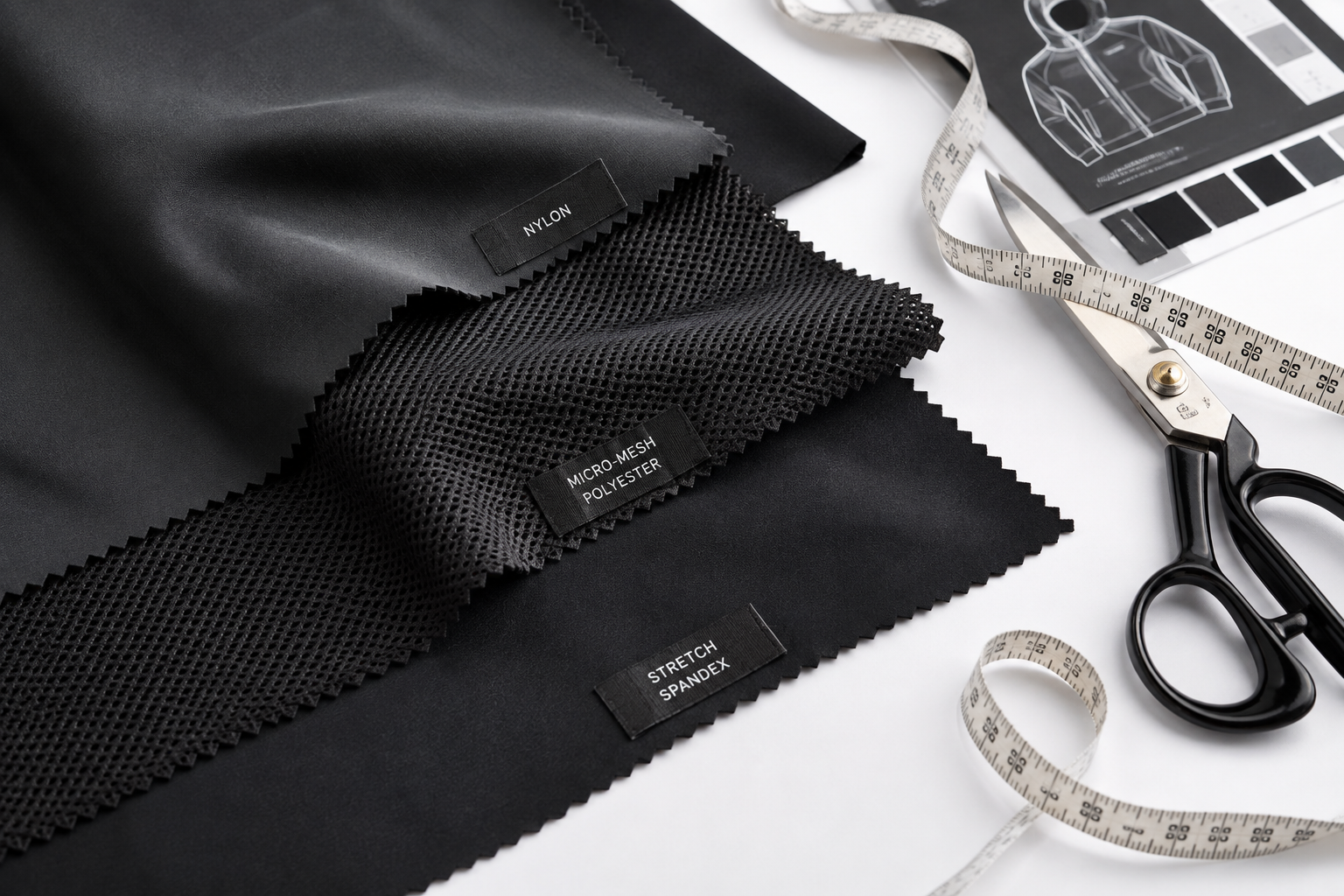
2. Nylon (Polyamide): Premium Softness & High Abrasion Resistance
Nylon is a ultra-durable synthetic fiber known for its exceptionally smooth, silky hand-feel. While slightly more expensive than polyester, nylon offers superior elasticity, softer texture against the skin, and high resistance to tearing or pilling.
- Best Used For: High-end seamless activewear, squat-proof gym leggings, and premium sports bras.
- Key Advantage: Offers exceptional breathability and comfort while maintaining structural strength. Learn more about how moisture-wicking fabric technology works in modern athletic textiles.
3. Spandex / Elastane: Essential 4-Way Stretch
Spandex (commonly known by the brand name Lycra) is rarely used on its own. Instead, it is blended into polyester or nylon (typically in ratios between 8% to 25%) to provide dynamic 4-way stretch and compression capabilities.
- Best Used For: Compression rash guards, athletic tights, biker shorts, and fitted performance tops.
- Key Advantage: Retains shape after extreme stretching, ensuring garments conform tightly to muscles without restriction.
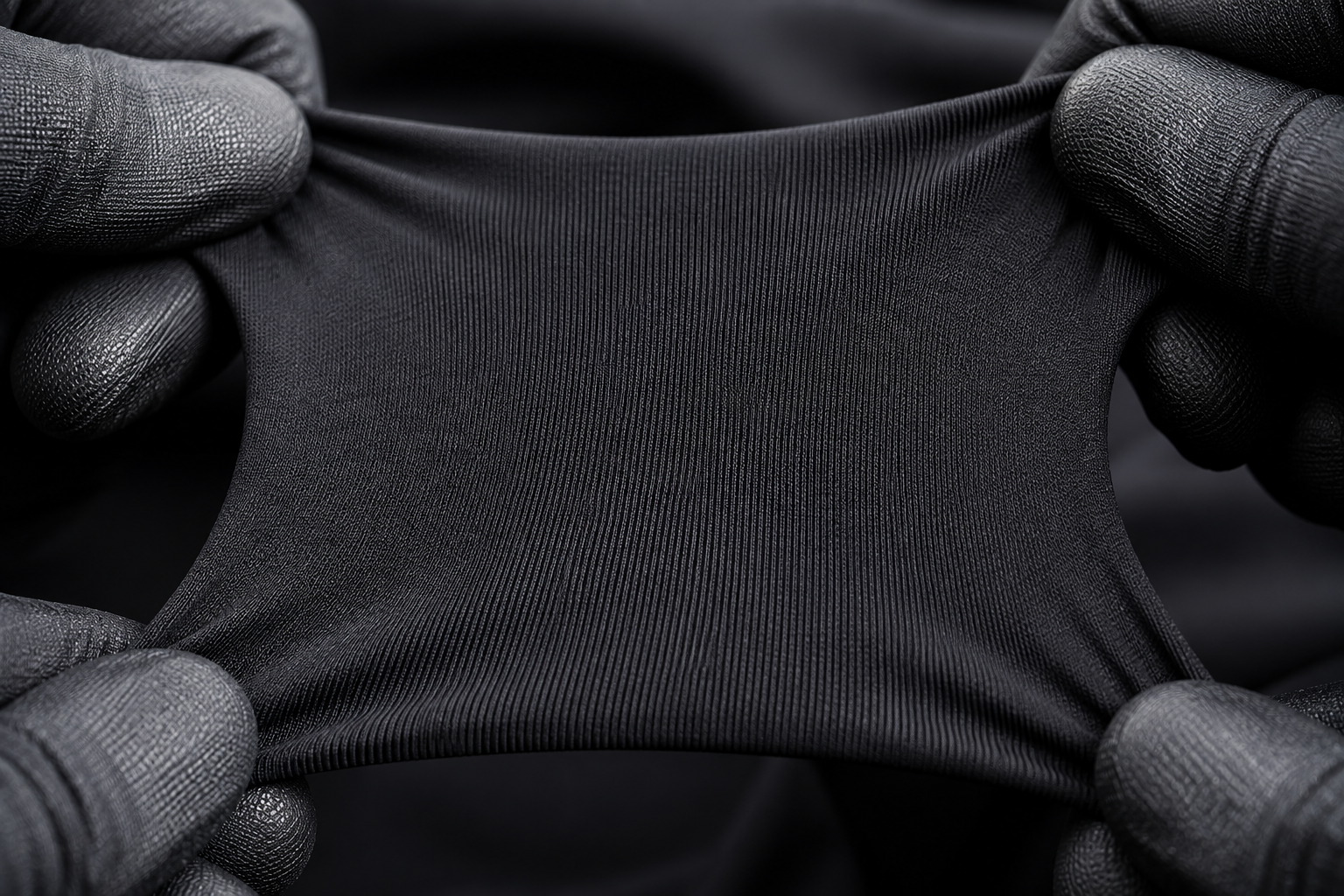
4. Bamboo & Eco-Synthetic Blends
Sustainable athletic wear is rapidly growing in demand. Bamboo rayon blended with organic cotton or recycled polyester offers natural anti-bacterial properties, hypoallergenic comfort, and natural temperature regulation.
- Best Used For: Yoga apparel, recovery wear, and eco-conscious lifestyle activewear lines.
Matching Fabrics to Specific Sportswear Garments
| Garment Type | Recommended Fabric Composition | Key Technical Feature |
|---|---|---|
| Squat-Proof Leggings | 75% Nylon / 25% Spandex (280-320 GSM) | High density opacity & 4-way stretch |
| Performance Gym Tees | 90% Polyester / 10% Spandex (160-180 GSM) | Moisture-wicking & micro-mesh ventilation |
| Compression Rash Guards | 85% Polyester / 15% Spandex (220-250 GSM) | High muscle containment & flatlock seams |
| Heavyweight Gym Hoodies | 100% Cotton or 80/20 Cotton-Poly (400+ GSM) | Structural drop-shoulder drape & warmth |
When submitting your designs to our factory floor, make sure to detail your target textile compositions and GSM weights directly inside your sportswear tech pack. If you are still testing your market, you can launch multiple custom fabric colorways starting with our flexible 50-piece minimum order quantity.
Performance Sportswear Fabric FAQs
Q: What fabric weight (GSM) is best for squat-proof leggings?
A: For completely opaque, squat-proof gym leggings, we recommend a fabric weight between 280 GSM and 320 GSM using a high-gauge Nylon/Spandex blend. Lower weights (under 230 GSM) risk becoming sheer when stretched.
Q: Is 100% cotton suitable for performance sportswear?
A: 100% cotton is fantastic for casual streetwear hoodies and pump-cover t-shirts, but it is not recommended for intense cardio or training. Cotton is hydrophilic (absorbs water), meaning it absorbs sweat, becomes heavy, and dries very slowly during exertion.
Q: What is the difference between 2-way stretch and 4-way stretch fabric?
A: 2-way stretch fabric stretches in only one direction (usually crosswise from seam to seam). 4-way stretch fabric expands both crosswise and lengthwise simultaneously, providing maximum freedom of movement required for high-performance athletic wear.