
DTF vs Screen Printing : Which is Best for Your Clothing Line?
In the competitive world of custom apparel, choosing the wrong decoration method can completely ruin a great design. A graphic that looks incredible on your digital tech pack must translate physically to the garment without cracking, peeling, or feeling unnecessarily heavy. Two of the most dominant commercial printing techniques in modern garment manufacturing are Direct-to-Film (DTF) and traditional Screen Printing. But which one is the right choice for your specific clothing line? This guide breaks down exactly when to use each method based on your artwork, fabric choice, and order volume.
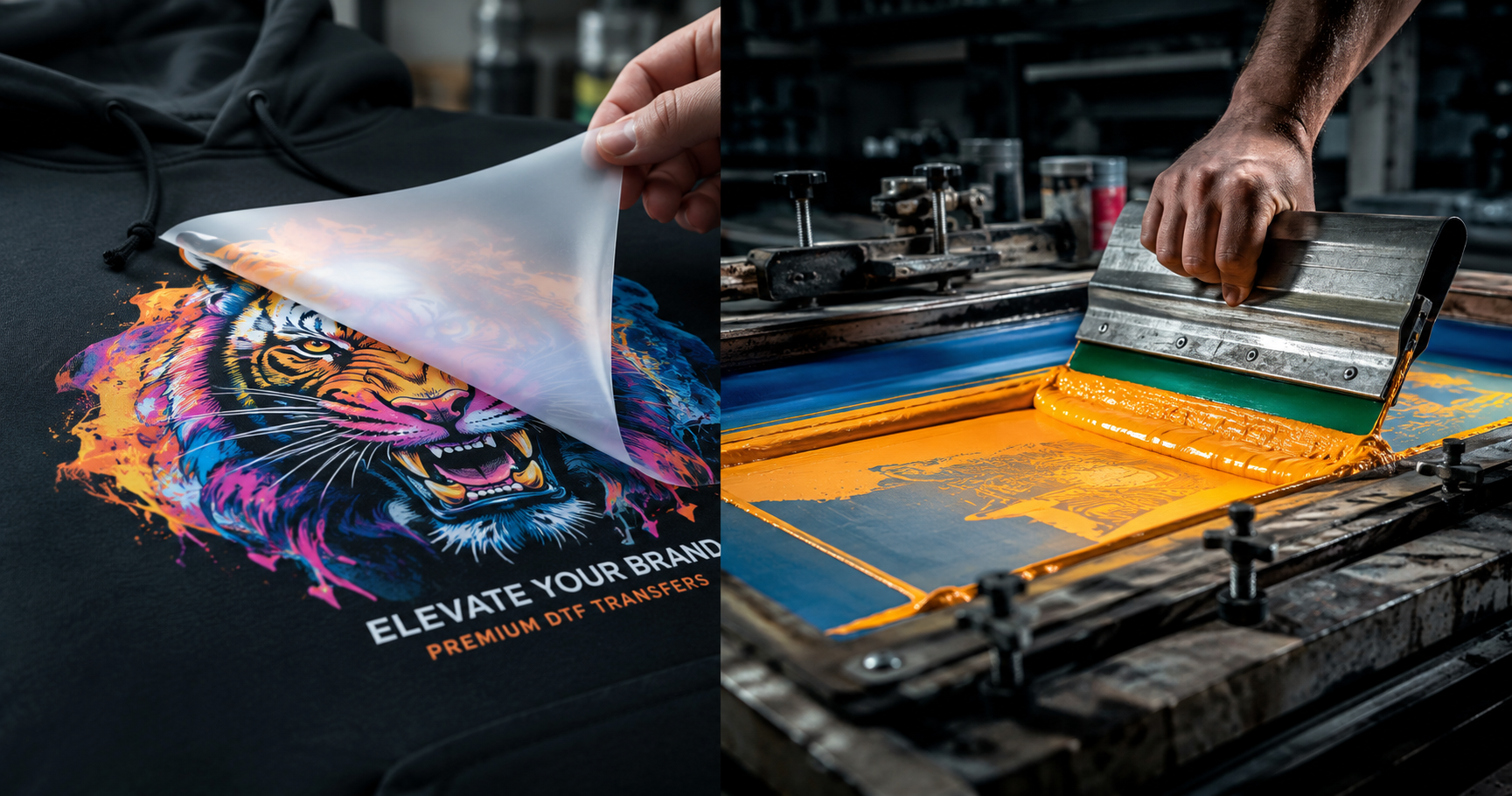
What is Commercial Screen Printing?
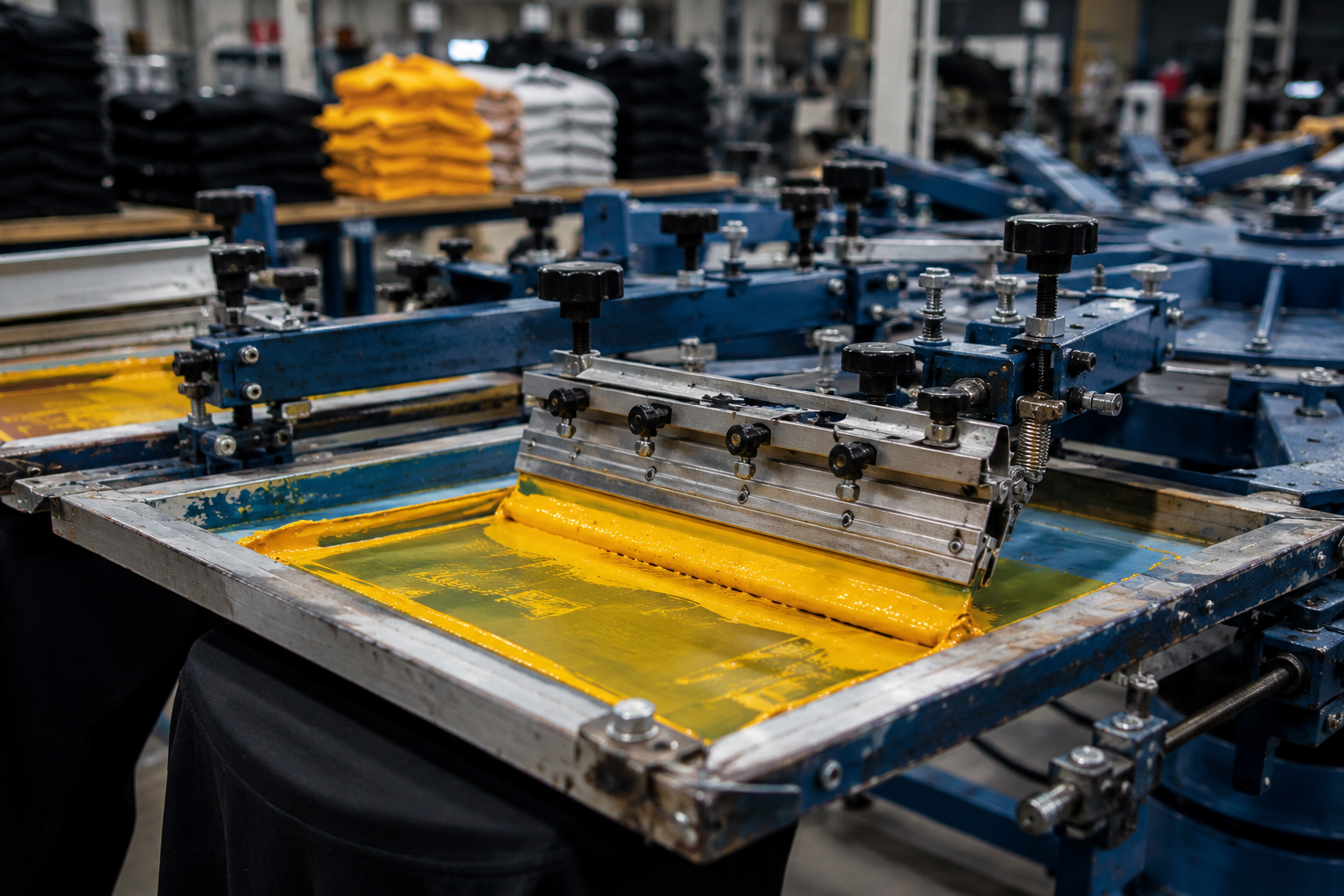
Screen printing is the most traditional and widely recognized method for custom apparel decoration. The process involves separating your digital artwork by color and burning each specific layer into a custom mesh stencil (the screen). Heavy plastisol or water-based ink is then physically pushed through the screen printing mesh directly onto the fabric. Because of the intensive labor required to set up the screens, this method is considered the undisputed king of high-volume, bulk manufacturing for simple vector designs.
What is Direct-to-Film (DTF) Printing?
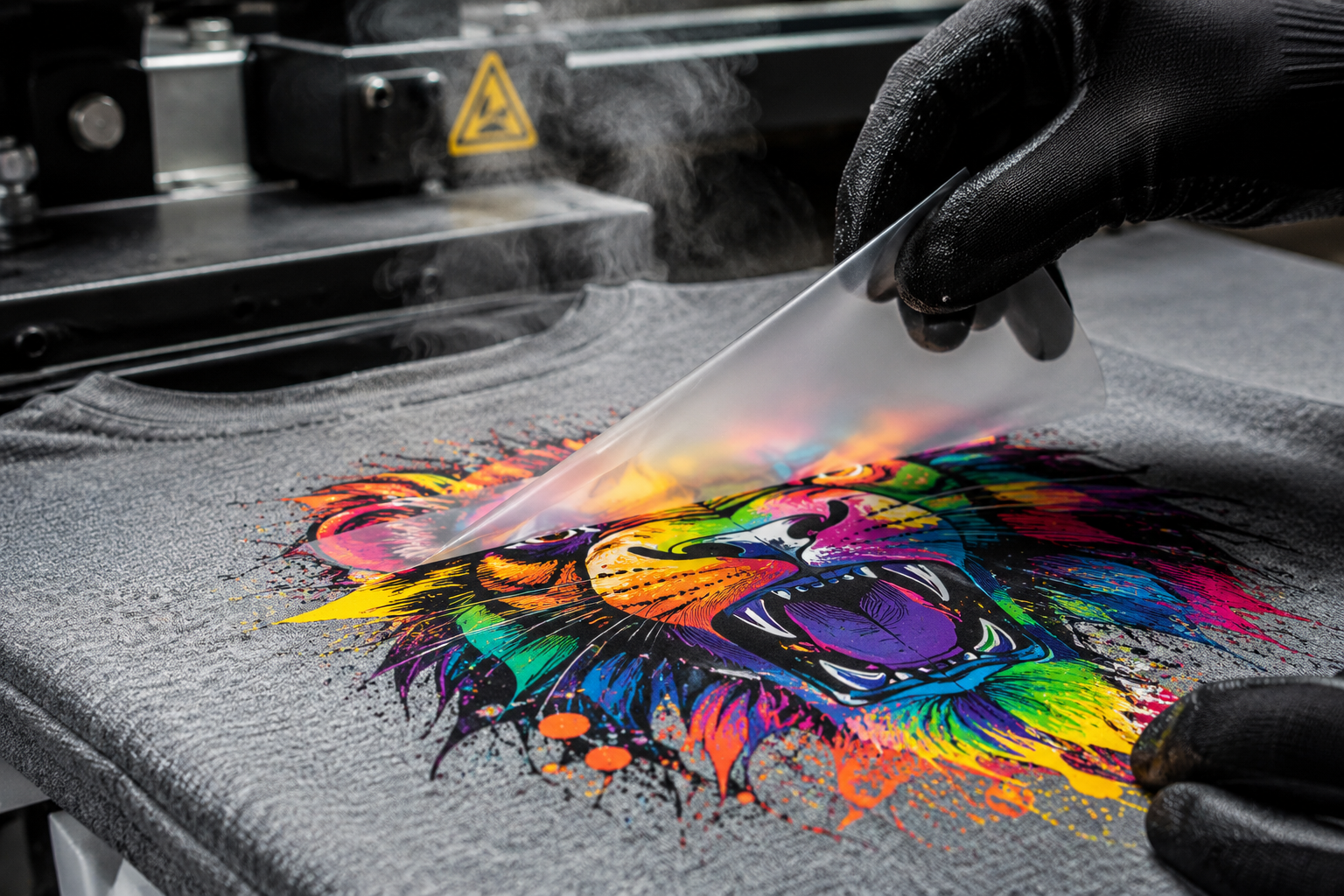
Direct-to-Film (DTF) is a highly advanced digital printing process. Instead of pushing ink directly into the shirt, a specialized digital plotter prints your exact, full-color design onto a thin PET transfer film. While the ink is still wet, a micro-fine thermoplastic polyurethane (TPU) adhesive powder is applied and heat-cured.
The finished transfer is then applied to the custom garment using an industrial pneumatic heat press. This modern digital process completely bypasses the need for physical screens, offering immense flexibility for independent brands.
Head-to-Head Comparison for Apparel Brands
1: Color Capacity & Detail
The Winner for Detail: DTF. Because it is a digital process, DTF excels at photorealistic images, complex gradients, and unlimited color counts in a single pass without any extra setup fees.
The Winner for Exact Color Matching: Screen Printing. If your brand guidelines require an exact Pantone (TPX/TCX) spot-color match across thousands of units, screen printing provides the most accurate and vibrant solid color replication.
2: Setup Costs & MOQs
The Winner for Startups: DTF. Without the need to burn expensive physical screens for every color, DTF has a remarkably fast setup and is incredibly cost-effective. This is why we utilize it heavily for our low 50-piece runs so brands can test multiple designs without massive inventory risk.
The Winner for Mega-Volume: Screen Printing. Once the setup is complete, the physical printing process is incredibly fast. For large, simple orders of 500+ items, the cost per unit drops significantly, making screen printing highly cost-effective at scale.
3: Durability & Feel
The Verdict: When applied and cured correctly, both methods survive 50 or more heavy commercial wash cycles without peeling or fading. Screen printing generally offers a softer “hand feel” on 100% cotton garments because the ink sinks into the fibers. However, DTF utilizes specialized stretch powders that allow the graphic to expand seamlessly with the garment, making it superior for high-tension activewear and spandex blends.
The Final Verdict
There is no single “best” method—only the right method for your specific project. If you are launching a complex, multi-color streetwear graphic and need low minimums, DTF is your answer. If you are producing 1,000 corporate hoodies with a simple, two-color logo, screen printing is the undisputed champion.
Ready to put these methods to the test? Submit your tech pack to our Sialkot manufacturing floor today for a free bulk screen printing or DTF production quote.