How to Start a Gym Wear Brand (Without Over-Ordering Inventory)
The fitness apparel market is booming, with the global sportswear market projected to reach USD 890.4 billion by 2033. However, many startups fail by ordering thousands of generic blanks that do not meet the performance needs of modern athletes.
Launching a successful fitness clothing line requires strategic planning, technical fabric sourcing, and a manufacturing partner that allows you to scale without massive inventory risk. Here is your comprehensive five-step guide to building a custom activewear brand from the ground up.
Step 1: Identify Your Fitness Niche
The term “activewear” is too broad for a startup. To succeed, you must design for a specific demographic.
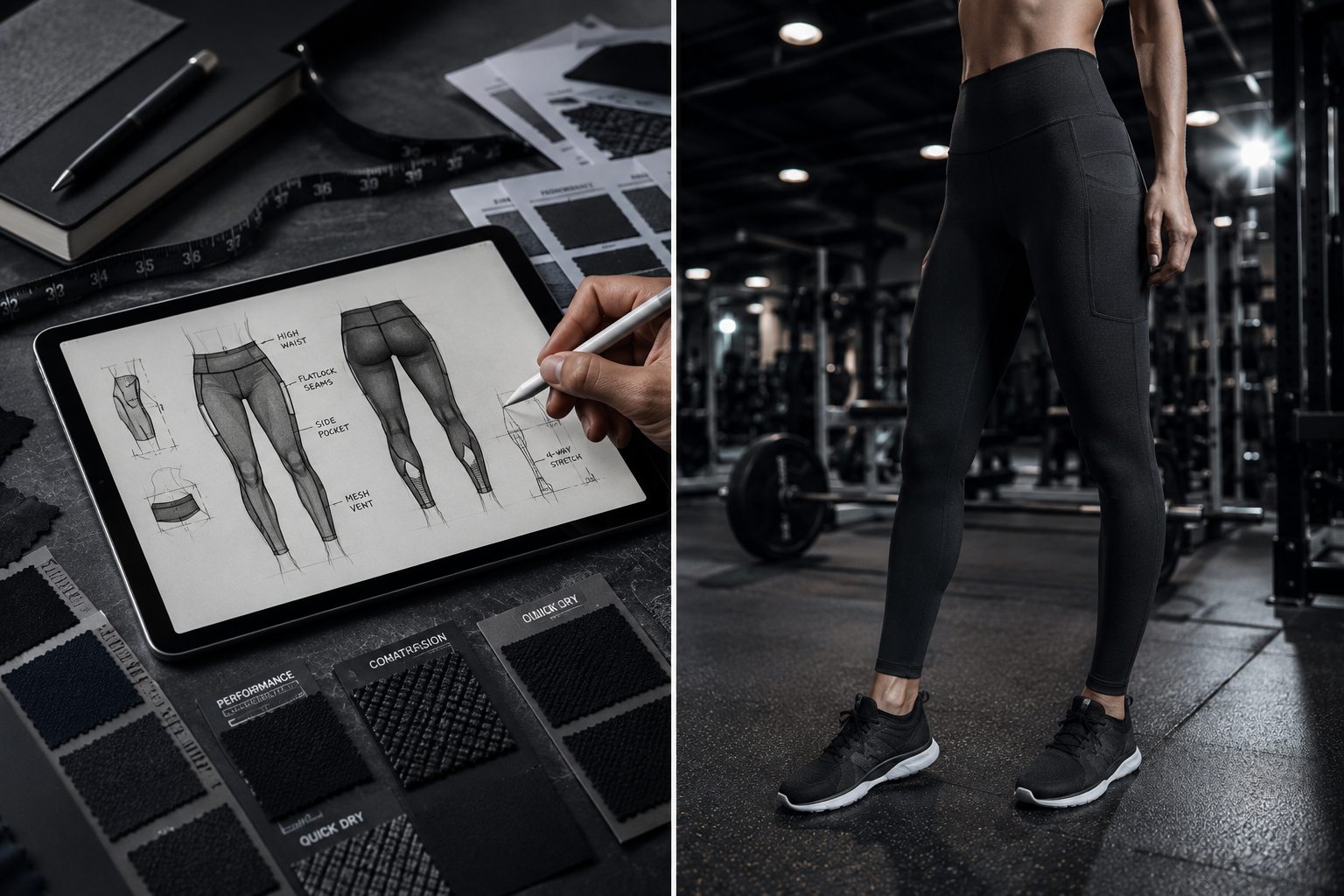
Are you targeting hardcore powerlifters who need oversized, heavyweight cotton drops to accommodate broad shoulders? Or are you designing for the yoga and pilates market, which demands high-stretch, seamless nylon silhouettes? Defining your exact customer dictates the cut, fit, and fabric of your entire first collection.
Step 2: Source Technical Performance Fabrics
Gym wear must perform under stress. Unlike casual streetwear, your fabrics must feature moisture-wicking properties and four-way stretch.
When designing compression garments like leggings or sports bras, you will need to utilize specialized blends. For instance, spandex is a synthetic polymer that can stretch up to 500% of its original length and quickly return to its shape without losing integrity. Partnering with a custom factory allows you to dictate the exact ratio of nylon to spandex to ensure your garments are squat-proof and highly durable.
Step 3: Engineer Your Activewear Tech Pack
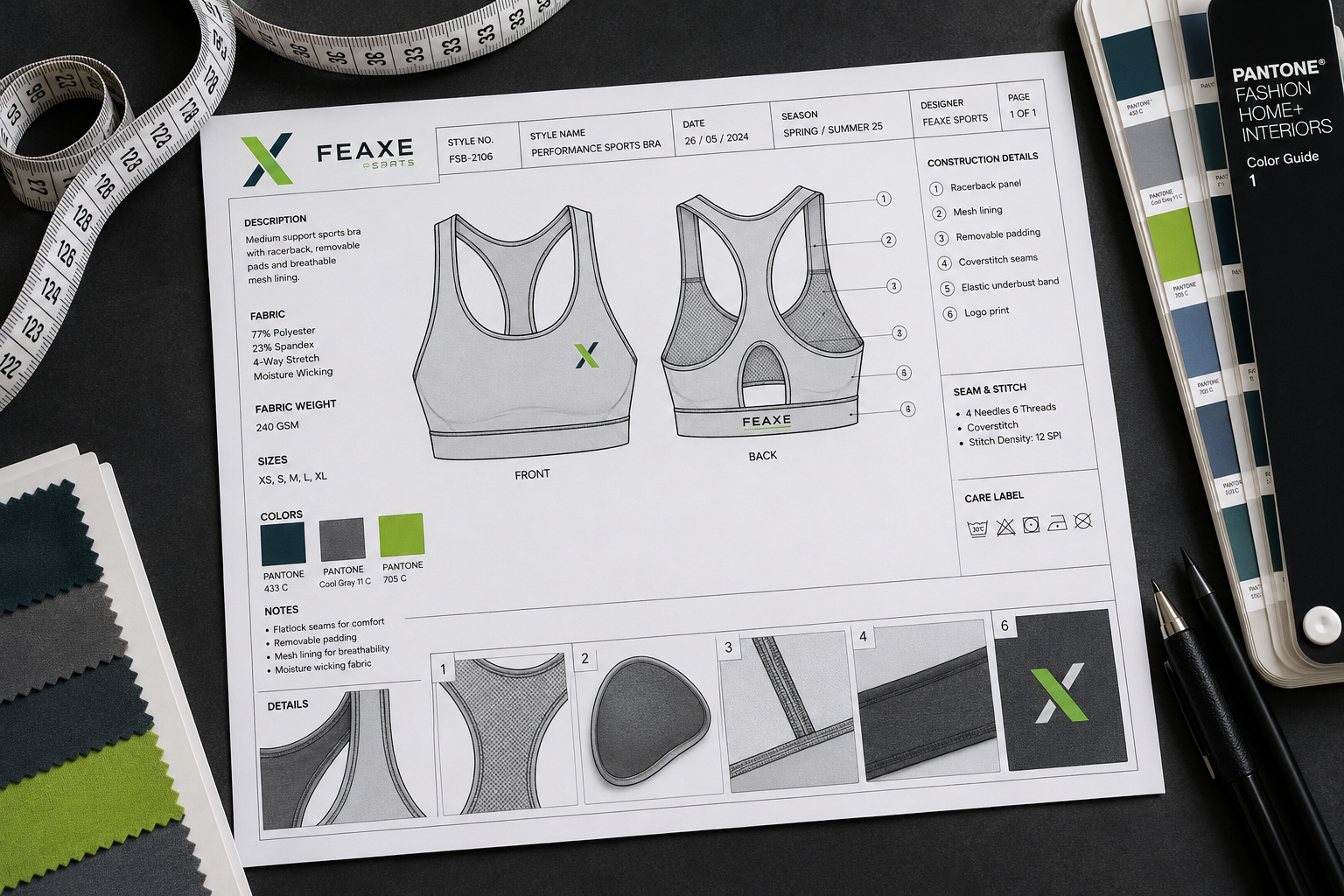
You cannot manufacture custom performance wear with just a sketch. You need an engineered blueprint known as a sportswear tech pack.
This document provides the factory with your exact sizing grade, ensuring that the compression fit remains mathematically perfect whether it is scaled down to an Extra-Small or up to a 2XL. It also details seam construction, such as specifying flatlock stitching to prevent skin chafing during intense movement.
Step 4: Partner with a Low MOQ Activewear Manufacturer
The biggest mistake new brand owners make is locking up their entire budget in a 1,000-piece minimum order with an overseas mega-factory.
By partnering with a dedicated facility like Feaxe Sports, you can leverage our highly accessible 50-piece minimum order quantity (MOQ). This allows you to test three different legging colorways or sports bra designs in the market simultaneously, identifying what your customers actually want before committing to a massive bulk production run.
Step 5: Master Private Label Tagless Branding
Premium gym wear requires specialized finishing. Woven neck tags can cause severe irritation and chafing when a customer is sweating or moving rapidly.
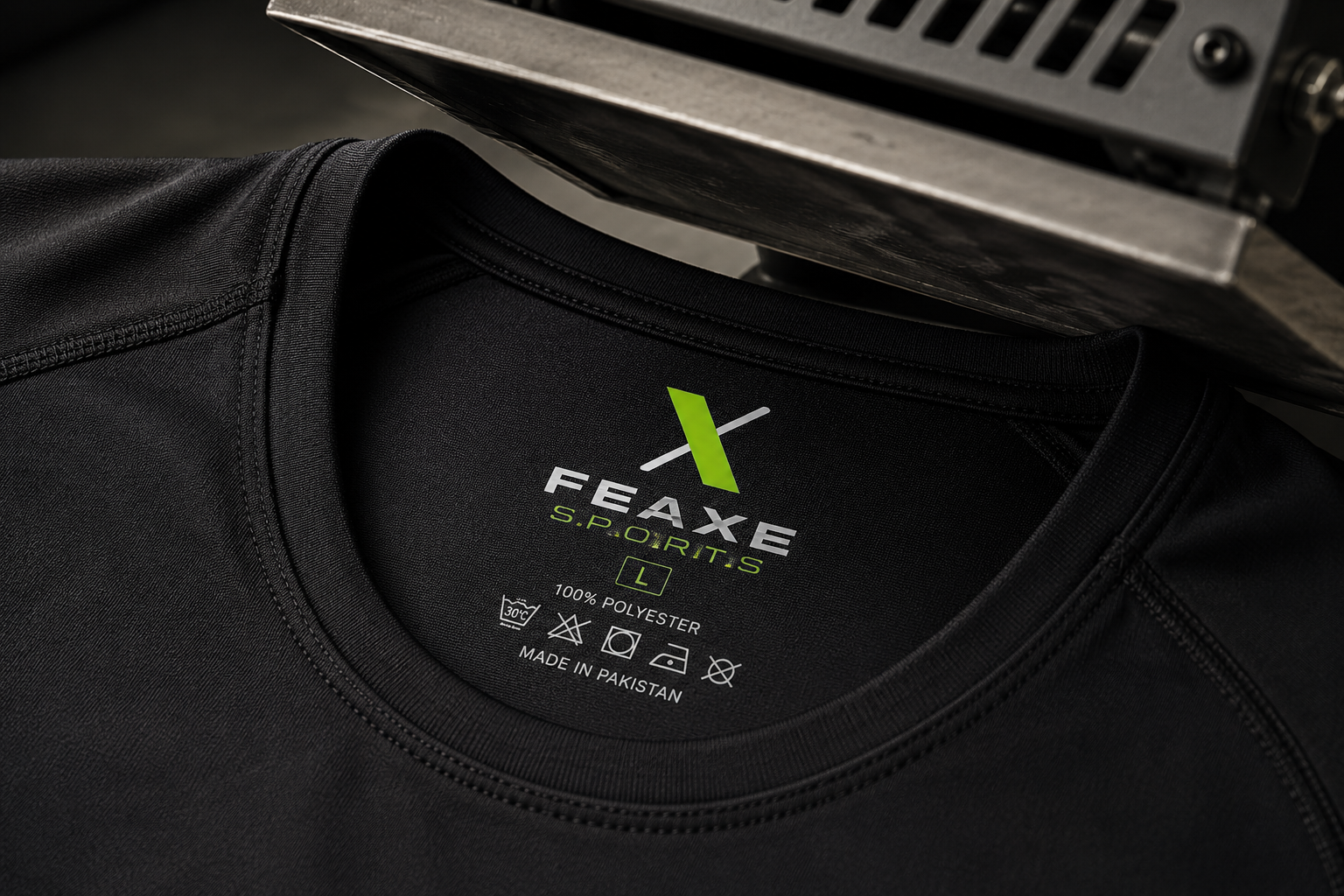
To elevate your brand’s perceived retail value and provide maximum comfort, you must utilize heat-transfer neck labels for tagless branding. This permanently applies your logo, sizing, and wash care instructions directly into the fabric, establishing a professional, high-end finish.